Is there space for competitive sports in early years settings?
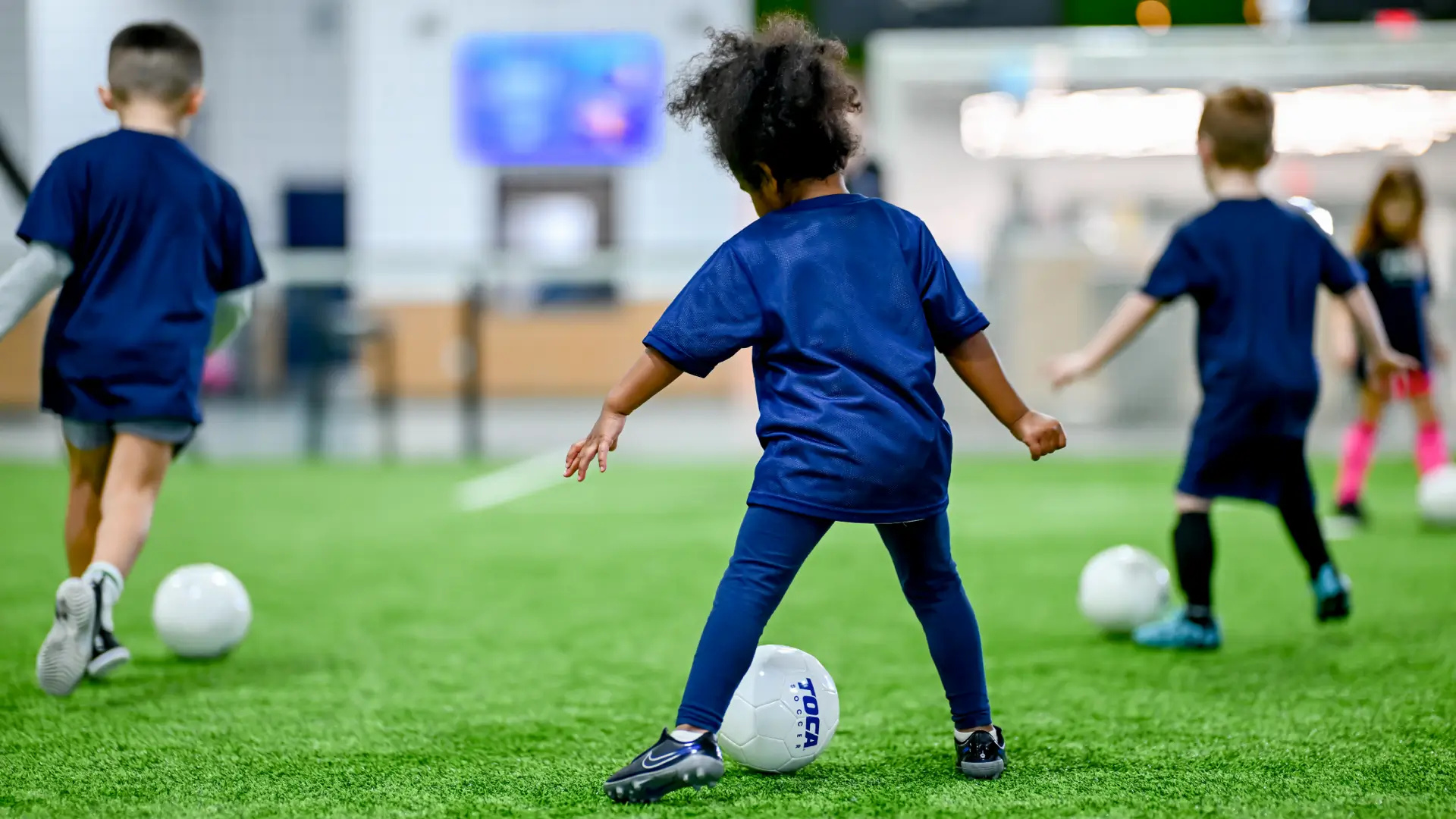
As the summer term is starting to draw to a close, and with the weather improving, it is often this time within the academic year when many early years settings and schools hold outdoor events such as sports days. We often schedule these sporting events as a long-standing school tradition. However, the traditional events often held at sports days, such as an egg and spoon race and having two children tied together to run the two-legged race from a starting line to a finishing line, with practitioners at the ready with 1st, 2nd and 3rd place stickers have almost been forgone. With increasing concerns around health and safety and a growing aversion to competitivity, many of these sporting events have been replaced by non-competitive activities, where every child’s participation is recognised and celebrated. The focus is on everyone taking part rather than ‘winning’ and ‘losing’.
This shift seems to be felt most in early years and primary education, where collaboration is favoured over competitiveness. There are no formal guidelines on whether sports within educational settings should be competitive or not. So ultimately it is a decision based upon a setting’s own ethos, with many opting for the latter, often under the misunderstanding that it automatically makes sports inclusive. This article reflects upon the benefits of competitive sports and puts forward a perspective that a space within early years education should be made for it.
The importance and benefits of competitiveness sport activities in early years
From my own professional experience, many children are naturally competitive. There will always be children who want to be the first in line or the first to start an activity. Even within unstructured play, children will often ask their peers to race them to see who is the fastest, or who can climb the highest on the climbing frame. This innate competitive drive can often be seen in children around the age of 4-5 years, as they start to develop their sense of self. By discouraging this behaviour you can hinder a child’s motivation and lose learning opportunities.
Sporting activities are beneficial to young children’s overall health and wellbeing as they promote healthy practices. Sports provide many opportunities for children to develop their physical skills, which is recognised as a prime area within the Early Years Foundation Stage framework. However, competitive sports add additional layers to this and come with their own unique challenges and benefits for children. Some of the benefits include (but not limited to);
- Provides children with opportunities to experience accomplishments and setbacks, which help to foster their self-regulation skills.
- It can support and develop key social skills as children learn about rules and working together (particularly in competitive team sports). Children will also learn and experience concepts such as patience, fairness and turn taking.
- Children can learn about risk taking, trying new things and build resistance. They will learn not to give up if they were not successful the first time and to keep trying.
- When children are not successful, it provides an opportunity to support and encourage them to reflect and to problem-solve. This can be done by encouraging them to think about what they did this particular time, which may have caused them to be unsuccessful and what they could do differently next time.
Competitiveness and resilience
The early years is a time for children to learn and develop through play, in a supportive, nurturing and inclusive environment. Many skills that a young child develops in their early years provides them with a strong foundation for future learning. We want to support children to become confident, resilient and provide them with support and opportunities to reach their full potential. Sports can be used as a safe space for children to encounter competitiveness. By taking this element out of sports, you are taking away that safe space where children can learn key skills, which they will need for later life. In adulthood, it will be more challenging to catch up on those missed skills from their early years, especially as there will be no support or guidance from practitioners.
As children get older and make their way through compulsory education, they will come to a crossroad where they must decide if they want to continue in their education at university level or join the workforce. Either option requires an application process, where you are competing against others who are applying for the same place at university or a vacancy within the workforce. You may be fortunate and get the place at the university or the job that you wanted, but equally you may not. This might be a huge setback for a person, and if they have not had previous opportunities to experience competitiveness and learn to be resilient when they are not successful this time, can have a more significant impact upon them. Therefore, the early years is a key time for children to start learning and developing these skills, especially as they have the support of adults to guide them through.
Things to consider
The most important thing to consider is how you are providing and presenting competitive sports to young children. Not every sports activity you provide to children should be competitive and the focus when engaging in competitive sports should not solely be on the success. Competitiveness in sports should be an added element and not the predominant feature. The focus should always remain upon developing movement skills, social skills and most importantly having fun. There should always be a balance, as we all do when we are planning opportunities for self-directed play and adult-led play.
There is also a misconception, I believe, that by simply taking away the competitiveness aspect, sports automatically become inclusive to all children. However, there is so much more to creating inclusive learning opportunities than this. Competitive and non-competitive sports should always be age and developmentally appropriate to reflect the ability of the children within your class. You should also offer children opportunities to engage in a wide range of sporting activities and be mindful to remain gender neutral and not uphold or reinforce gender stereotypes (everyone can play football; it is not just for boys!).
A further point to consider is your role as a practitioner in being able to create and deliver a positive competitive environment, where every child feels valued. You can do this by recognising the efforts and progress of every child within your class across different activities and highlighting their individual strengths. Furthermore, you should strive to ensure that you are delivering meaningful experiences for children in which they each have an opportunity to learn and develop new and existing skills. It is also important to consider the language that you use when celebrating children’s accomplishments and supporting their setbacks. You should avoid using labels and terms like ‘winners’ and ‘losers’.
Working in partnership with parents
Whichever approach to sports that you choose to deliver within your setting, be it competitive or not, it needs to be a whole setting approach, and you need to share that with the parents of the children within your setting. In some families, competitiveness is highly regarded and children are pushed ‘to be the best’. Therefore, you need to have a clear approach to delivering sports activities which reflect your own settings ethos and set clear boundaries to help manage parents’ expectations.
Also whenever possible, include parents in sporting events at the setting and encourage them to participate alongside their children. Typically holding an annual sports day provides an opportunity to include some parent and practitioner races. Which also provides an opportunity for role modelling.
Conclusion
Competitive sports in early years settings provide children with opportunities to experience accomplishments and setbacks in a safe, nurturing environment where practitioners are on hand to help them work through any conflicts or emotions that they may encounter. It builds a set of foundational skills that children will need to draw upon in later life, when they begin their journey into adulthood and enter further education and employment.
In my own opinion I do think there should be a space made for competitive sports within early years settings, although it should always be delivered in an age and developmentally appropriate way. And as with all learning opportunities, there should be a balance and a clear purpose.